Container Security Incidents in 2026: How Microsegmentation Mitigates the Damage
February has seen multiple container security incidents disclosed, continuing a trend that security researchers have been tracking since mid-2025. The common thread in these incidents is not the initial compromise vector — it is how far attackers were able to move after gaining a foothold in a containerized environment.
The Container Blind Spot
Containers are designed for density. A single host may run dozens of containers, each with different functions, different data access, and different risk profiles. In flat network configurations — which are still distressingly common — a compromised container in the same host can reach any other container on that host, and potentially any container in the cluster.
This is the blind spot that attackers are actively exploiting. Recent incident reports show attackers compromising a publicly exposed container (typically through a vulnerable application dependency), then using the host network namespace to probe for other containers, service accounts, and mounted secrets.
Microsegmentation as Containment
This is where microsegmentation provides its highest-value defense. Workload-level segmentation in container environments means:
- Per-container identity. Each container gets a unique identity derived from its deployment metadata, image hash, and orchestrator labels. Policies attach to the identity, not the IP address.
- Least-privilege communication. A container running a Node.js frontend can only talk to its specific API backend container — not to any random pod in the cluster.
- Ephemeral policy attachment. When a container is replaced during a rolling update, its replacement inherits the same policies automatically. No gap window.
Practical Deployment
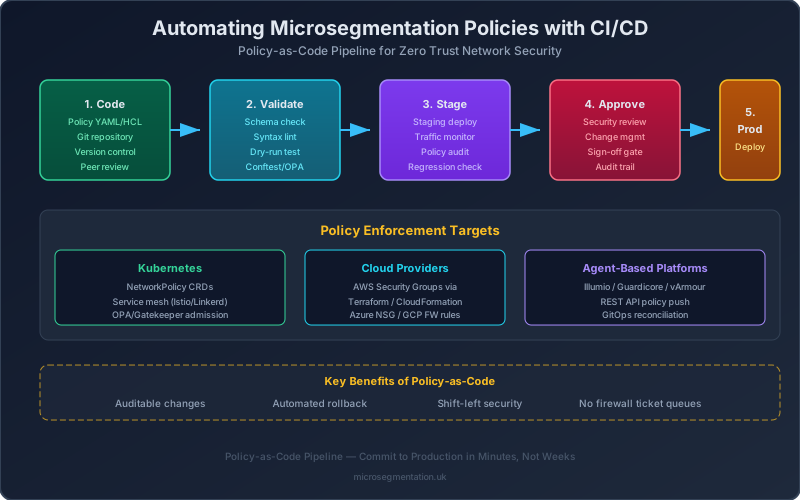
For Kubernetes environments, the most practical path is combining Kubernetes NetworkPolicy with a service mesh for L7 controls. For non-Kubernetes container platforms (Docker Swarm, Nomad, or plain Docker Compose), agent-based microsegmentation is required since those platforms lack native policy enforcement.
Start by classifying your containers into tiers: internet-facing, internal-service, data-layer, and management. Apply the strictest policies to the data layer — those containers should initiate zero outbound connections and only accept inbound from specifically authorized internal services.
For runtime visibility into container traffic patterns, consider integrating with AI-driven analysis platforms like aisecurities.uk to detect anomalous east-west communication in real time. For WAAP-layer protection of your container ingress at the application edge, waap-security.uk provides the complementary perimeter defense.
The Bottom Line
Container security incidents are increasing because containers are easy to compromise and, without segmentation, easy to pivot from. Microsegmentation turns the density advantage back in your favor — the same density that makes lateral movement easy for attackers makes containment efficient for defenders.
Want to go deeper? Check out these resources on Amazon:
As an Amazon Associate I earn from qualifying purchases.