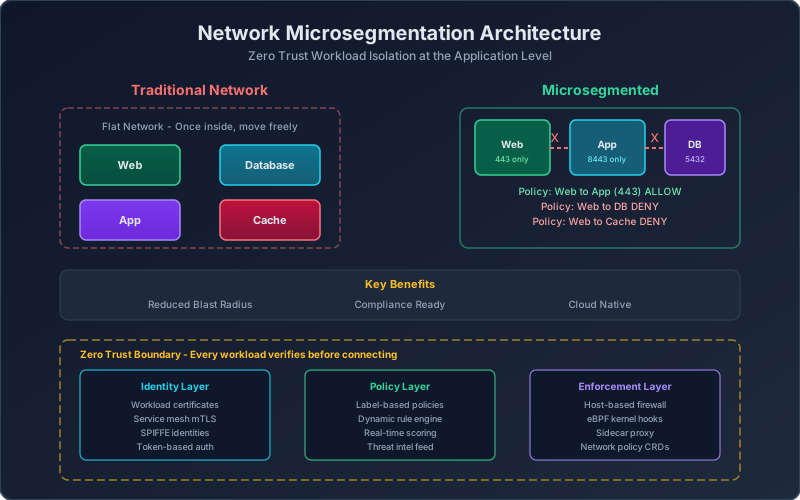
Gartner's 2026 Network Security Report: The Microsegmentation Mandate
Gartner’s annual network security report dropped mid-March, and the message for infrastructure and security leaders is unambiguous: microsegmentation is no longer emerging — it is expected. The 2026 report frames workload-level segmentation as a core component of any serious zero trust implementation, not an optional add-on.
Key Findings
The report highlights several data points that security architects should have on their radar:
70% of organizations will have microsegmentation in production by 2027. Gartner projects adoption rates climbing from approximately 35% in 2024 to over 70% by the end of 2027. The primary drivers cited are ransomware containment requirements and cloud compliance mandates.
Lateral movement containment is the top use case. After years of vendors emphasizing compliance and visibility, Gartner’s survey data shows that lateral movement prevention is now the single most-cited reason for microsegmentation adoption — mentioned by 68% of respondents.
Agent-based approaches are winning in multi-cloud. For organizations running workloads in two or more public clouds, agent-based microsegmentation platforms are preferred over cloud-native security groups by a 3:1 margin. The primary reason: consistent policy management across different cloud provider APIs.
What the Report Misses
As with any Gartner report, there are areas where the analysis does not fully capture practitioner reality. The report underweights the operational complexity of agent-based deployments at scale — particularly the agent lifecycle management overhead when you have 10,000+ workloads across multiple data centers and cloud regions.
Additionally, the report does not sufficiently address the container segmentation challenge. Kubernetes-native NetworkPolicy is mentioned as a tool, but the report glosses over the gaps that appear when containers must communicate with non-container workloads — a scenario that describes most production environments.
Implications for Your Strategy
If your organization is mentioned in Gartner’s research (as a client or through an inquiry), expect your leadership to ask about your microsegmentation plans. The report gives CISOs a language to justify segmentation investments to the board.
For organizations considering their approach, the convergence of microsegmentation with broader web application and API protection strategies — like those available at waap-security.uk — represents a natural evolution. The combination of WAAP for north-south and microsegmentation for east-west creates the comprehensive coverage that Gartner is now positioning as the standard. For AI-driven policy recommendations based on your specific traffic patterns, aisecurities.uk provides the analytics layer.
The Bottom Line
Gartner has officially moved microsegmentation from “innovative” to “expected.” If you have not started yet, the 2026 report provides the business case you need to get leadership buy-in. If you have started, the report validates your direction and gives you benchmarks for measuring your maturity.
Want to go deeper? Check out these resources on Amazon:
As an Amazon Associate I earn from qualifying purchases.