Zero Trust Maturity Model Updates: Moving Beyond Traditional Firewalls
Look, we all know the security world’s obsessed with Zero Trust. It’s the buzzword that won’t die. But a lot of shops are still stuck in the past, thinking a firewall at the perimeter is enough. It’s not. Not anymore.
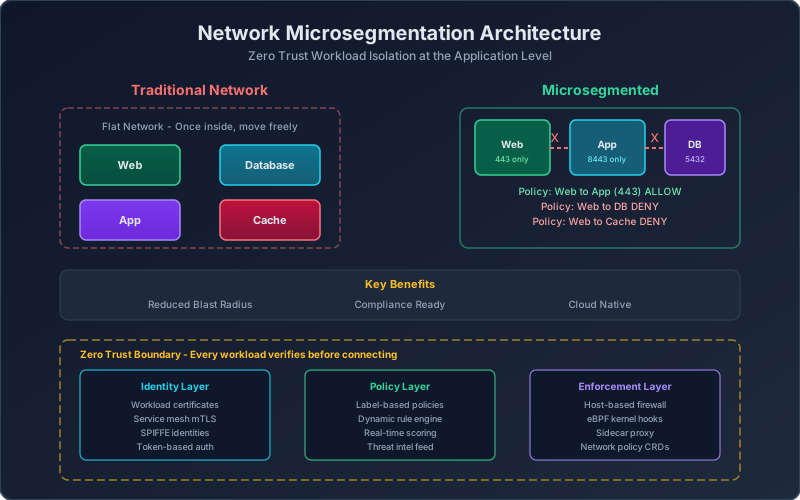
I’ve been in IT security for a while now, and I’ve seen the shift. We used to build castles with moats. Strong perimeter, but once you were inside? You could wander pretty much anywhere. That’s the old way. It’s like having a bouncer at the front door of your building, but then leaving all the internal doors wide open. That’s the old way. It’s like having a bouncer at the front door of your building, but then leaving all the internal doors wide open.
Now, we’re talking Zero Trust. It means “never trust, always verify.” Every user, every device, every connection. You gotta assume breach. And that’s where microsegmentation comes in.
Think of it like this: instead of one big open office, you’re putting up walls and doors inside the building. Each department, even each workstation, has its own locked door. Only people with a specific reason to be there get a key. That’s microsegmentation. It chops up your network into tiny, isolated zones.
Traditional firewalls? They’re good for the perimeter. They check traffic coming in and going out of your network. They’re like the guards at the main gate. But they don’t do much for the traffic between your servers, your applications, your databases – the stuff happening inside your network. That’s the East-West traffic. And that’s where most breaches spread like wildfire.
A compromised server in your database tier shouldn’t be able to just hop over to your customer data application. A traditional firewall won’t stop that. But microsegmentation? It absolutely will. It enforces policies at a much more granular level – down to the individual workload or application.
So, why are people still clinging to just firewalls? Inertia, mostly. Cost. Complexity. They think it’s too hard to re-architect their network. But here’s the reality: the cost of a breach that spreads because you didn’t implement microsegmentation is way, way higher. We’re talking financial loss, reputational damage, regulatory fines.
The Zero Trust maturity models are evolving. They’re moving beyond just perimeter security. They’re demanding granular control over internal traffic. That means microsegmentation is becoming less of a “nice-to-have” and more of a “must-have.”
Implementing microsegmentation isn’t just about buying a new tool. It’s a shift in mindset. You need to understand your application dependencies, map out your traffic flows, and define granular policies. It takes planning. But the payoff – drastically reduced attack surface and better containment of breaches – is huge.
Stop thinking of firewalls as the only line of defense. They’re part of the story, sure. But for a true Zero Trust posture, you need to build those internal walls with microsegmentation. It’s not just about blocking bad guys from getting in; it’s about stopping them from moving around once they’re inside.
Want to go deeper? Check out these resources on Amazon:
- Zero Trust Architecture
- Network Security Essentials: The Complete Guide to Understanding and Implementing Network Security