Q1 2026 Breach Data: How Microsegmentation Stops Ransomware Lateral Movement
The Q1 2026 breach reports are out, and the pattern is consistent: ransomware remains the dominant threat, and lateral movement is still the critical failure point. Multiple major breach disclosures this quarter highlighted the same story — initial access through a vulnerable edge service, followed by rapid east-west traversal to reach critical systems.
The Numbers That Matter
Aggregated data from incident response firms covering Q1 2026 shows:
- Median dwell time before detection: 16 days for organizations with flat network segments versus 4 days for those with workload-level segmentation.
- Average blast radius: 47 workloads compromised in flat environments versus 3 in microsegmented environments.
- Ransom payment likelihood: 62% for flat network victims versus 18% for those with effective segmentation — largely because segmentation prevented attackers from reaching the systems they needed to encrypt.
These numbers validate what security architects have been saying for years: segmentation is not about preventing initial access — it is about preventing the access from mattering.
The Ransomware Playbook
Ransomware groups follow a predictable pattern after initial access:
- Reconnaissance — the attacker maps the network to find high-value targets
- Credential theft — lateral movement tools like RDP, SMB, and PSExec are used to harvest credentials
- Privilege escalation — domain admin access is obtained through Kerberoasting, DCSync, or similar techniques
- Deployment — ransomware is distributed to target systems via SMB, group policy, or management tools
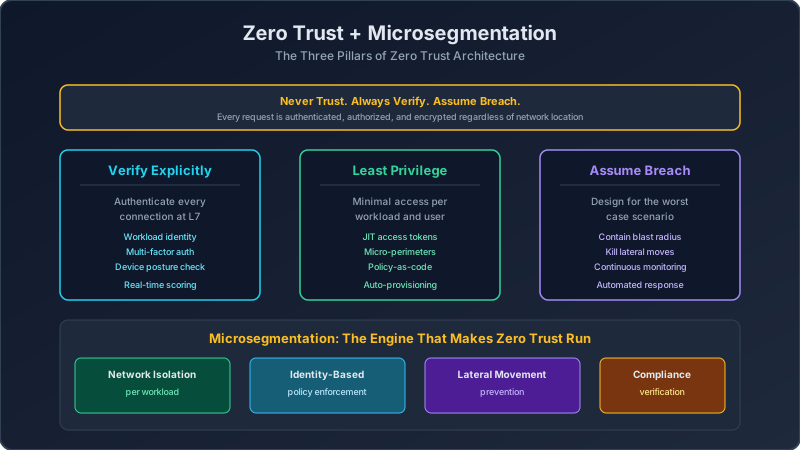
Microsegmentation disrupts this chain at step one. If the compromised workload cannot reach other systems for reconnaissance — because the only allowed traffic is to its specific upstream and downstream dependencies — the attacker never discovers the high-value targets.
Practical Measures
Review your segmentation policies against the Q1 breach data with these questions:
- Can a compromised web server reach your domain controllers? If yes, that is a route attackers will use.
- Can any workload initiate SMB outbound? SMB is ransomware’s favorite delivery protocol.
- Do your segmentation policies cover all three phases — discovery, alerting, and enforcement? Most organizations have only implemented alerting.
For real-time threat detection integrated with your segmentation controls, consider AI-driven traffic analysis platforms like aisecurities.uk that can identify the reconnaissance patterns that precede ransomware deployment. For WAAP-layer protection of web-facing applications that could serve as initial entry points, waap-security.uk provides the perimeter defense layer.
The Bottom Line
Q1 2026 breach data tells the same story we have seen for three years: flat networks get ransomed, segmented networks survive. The question is not whether your organization will be targeted — it is whether your segmentation will hold when it happens.
Want to go deeper? Check out these resources on Amazon:
As an Amazon Associate I earn from qualifying purchases.